A new chapter for Luxembourg: Prince Guillaume to become Grand Duke
On 3 October 2025, the Grand Duchy of Luxembourg will witness a historic and carefully choreographed transition. Grand Duke Henri will formally abdicate the throne, paving the way for his eldest son, Prince Guillaume, to become the new Grand Duke of Luxembourg.
This peaceful handover continues a long-standing Luxembourgish tradition of voluntary abdication within the reigning dynasty — one that prioritises stability, continuity, and modernization of the monarchy.
Luxembourg remains the world’s only Grand Duchy, a unique political distinction reflecting both its deep-rooted monarchy and modern constitutional framework. The current Grand Duke, Henri, ascended the throne in 2000, following the abdication of his father, Grand Duke Jean, who had reigned since 1964 after the abdication of Grand Duchess Charlotte.
Each of these transitions has been marked not by crisis or disruption, but by ceremonial dignity and public celebration. This model has become a hallmark of Luxembourg’s political culture — embracing generational renewal without political upheaval.
The day of the transition will include:
The formal abdication ceremony at the Grand Ducal Palace
Prince Guillaume’s swearing-in before the Chamber of Deputies
Public celebrations, including a concert and a night-time drone show in Luxembourg City
Known for his education in the UK and France, military training at Sandhurst, and public service in economic missions abroad, Prince Guillaume brings both international experience and a strong sense of tradition. His interests in social inclusion, entrepreneurship, and sustainability reflect the evolving role of European royalty in the 21st century.
While constitutional monarchies may appear symbolic, in Luxembourg, the monarchy plays a subtle yet influential role in national identity and international perception. For decades, the Grand Ducal family has represented Luxembourg abroad, often leading diplomatic and economic delegations that have helped shape its status as a global financial hub.
The upcoming transition is a reminder of what Luxembourg offers:
Political continuity in an often volatile region
A deep-seated culture of institutional stability
A monarchy that works in harmony with democratic institutions, reinforcing investor confidence
For multinational companies, financial institutions, and global investors, stability isn’t just symbolic — it’s strategic. Luxembourg’s well-governed monarchy is part of a broader system that has helped attract over €5 trillion in assets under management, not to mention its growing influence in green finance and fintech.
As Prince Guillaume takes the oath, Luxembourg signals to the world not just a changing of the guard, but a renewed commitment to stability, modernity, and responsible leadership.
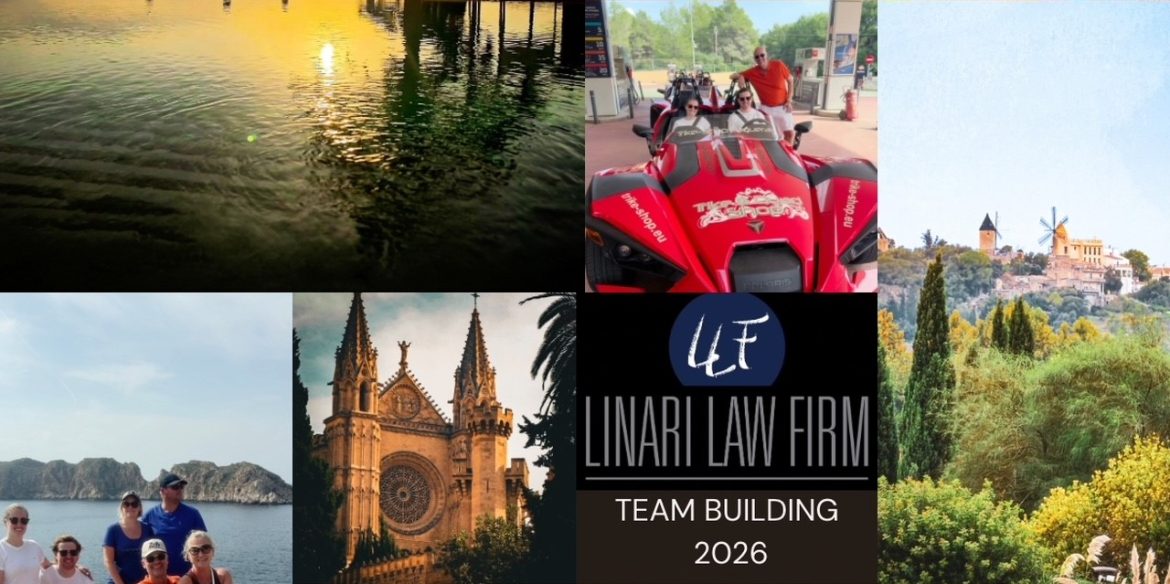
From 2 to 5 October, the Linari Law Firm team travelled to Port Adriano for a team building weekend in Mallorca, joined by their partners. The programme combined wine tastings, harbour walks and long dinners exploring Mallorcan cuisine. As a boutique law firm, Linari sees its close-knit relationships as its…
From 21 September 2026, the CSSF requires certain Luxembourg funds — UCIs, SIFs and SICARs governed by the amended Law of 17 December 2010 — to notify the activation and deactivation of redemption suspensions exclusively through the "LMT activation" module on the CSSF eDesk platform. The measure forms part of…
The Luxembourg Business Register has entered a new enforcement phase targeting companies with incomplete or outdated information in the RCS or RBE. Non-compliance may become visible on public register extracts and can ultimately result in financial penalties and administrative strike-off. Companies should ensure that their annual accounts, registered office details…
On 16 September, Luxembourg Finance Minister Gilles Roth announced the country's intention to issue a sovereign bond on distributed ledger technology (DLT). The Minister framed it as a European first for a sovereign bond of benchmark size — and potentially a world first, depending on its final size, maturity, distribution…
The Luxembourg government has published a draft Grand-Ducal regulation to replace the December 2022 fee scale and align CSSF supervisory fees with the regulator's rising costs. Most fees would increase by around 22%, though the change varies by entity and reaches up to 150% in limited cases, while preserving the…
Circular LBR 26/01 clarifies how beneficial owners should be identified for Luxembourg companies held through trusts or foundations. According to LBR, the beneficial owners of the underlying trust or foundation should be reported to the RBE by applying the specific rules under Article 1(7)(b) and (c) of the 2004 AML…
We use cookies to ensure that we give you the best experience on our website. If you continue to use this site we will assume that you are happy with it.